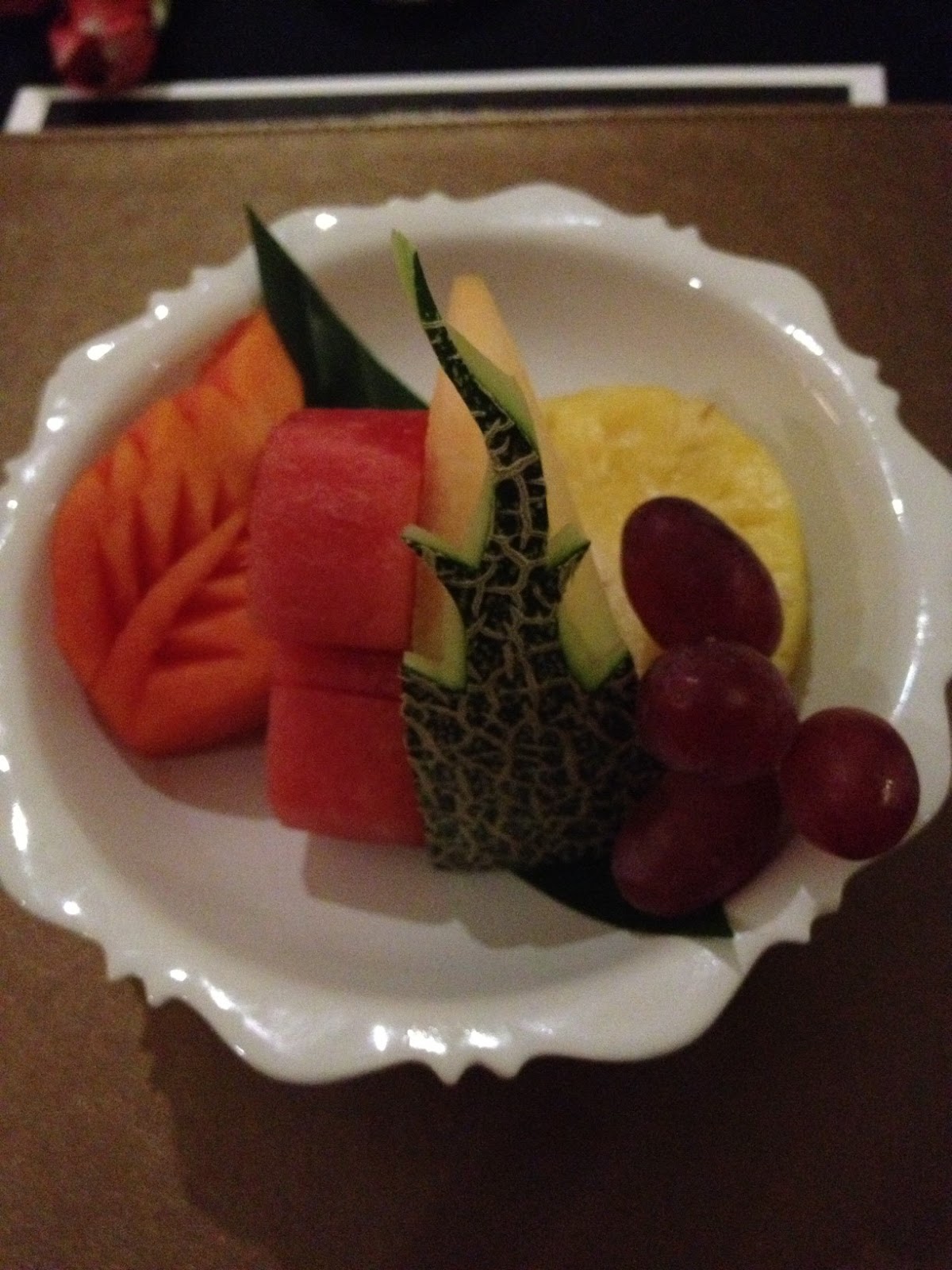
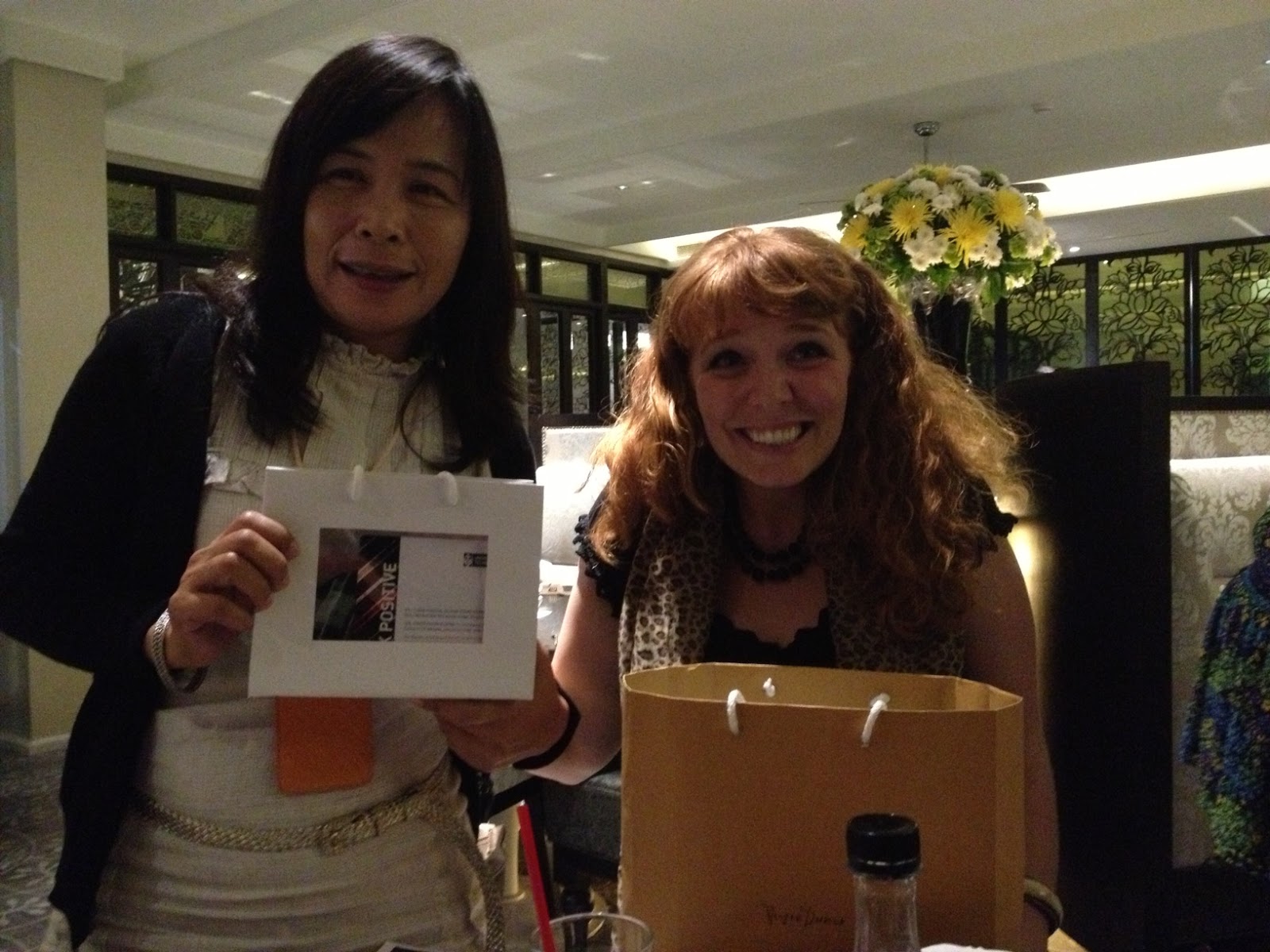
After a busy day filled with informative meetings, unfortunately the nursing program had come to an end. The last official spot on the itinerary was dinner at the Hua Chang Heritage Hotel, just down the road from the Ibis. The food was absolutely divine but the company was even better :) As sad as I was that it was the last day of the program, it was a great chance to reflect on our time in Thailand and spend time with some pretty awesome people. Emma and Nok were both received thank-you gifts from the group and we all feel very lucky to have had such wonderful leaders guiding our tour. I also feel so privileged to have received this opportunity; a massive thank you to UTS BUiLD!
Showing posts with label Siam. Show all posts
Thursday, 11 July 2013
Farewell dinner
Thursday 11th July
After a busy day filled with informative meetings, unfortunately the nursing program had come to an end. The last official spot on the itinerary was dinner at the Hua Chang Heritage Hotel, just down the road from the Ibis. The food was absolutely divine but the company was even better :) As sad as I was that it was the last day of the program, it was a great chance to reflect on our time in Thailand and spend time with some pretty awesome people. Emma and Nok were both received thank-you gifts from the group and we all feel very lucky to have had such wonderful leaders guiding our tour. I also feel so privileged to have received this opportunity; a massive thank you to UTS BUiLD!
Labels:
Australia,
Bangkok,
Departure,
Dinner,
Hotel,
Hua Chang Heritage Hotel,
Nursing,
Reflection,
Restaurant,
Siam,
Student,
Thailand,
Travel
Tuesday, 9 July 2013
Health for Wealth Day 9 - Vejthani Hospital & Siam Reiki
Vejthani Hospital
It was an early start this morning - to allow plenty of time for traffic, of course. We arrived at the hospital about 30 minutes early but that meant time for coffee! I was really excited for a presentation about maternity and paediatric care, but it was an opportunity for the hospital's facilities to be put on show from an executive perspective, unfortunately again the meeting not matching the itinerary's focus.
Vejthani Hospital was established in 1994 with the vision to be the leading private health services provider dedicated to delivery of high quality responses to society's changing health care needs.
Hospital capacity:
The hospital prides itself on its specialisation in ART and TRJ, adopting computer navigation and minimally-invasive techniques. New technologies extend to its Yuyama automated pharmaceutical robot, allowing for electronic medication ordering and smart dispensing (but not administration to the patient!). I felt as though there was still a huge focus on plastic and cosmetic surgery with the tag line being "Beauty is within reach".
We were given a tour of the hospital by Sawitree (DNS) and it all felt much the same to every other private hospital we had visited. I left a little confused as I asked one of our hosts about mental health facilities and I was told that no mental health facilities exist in the hospital, however the website states that there is a psychiatry clinic. Mental illnesses are still taboo in Thailand and temples are usually the first and only place where people who suffer from mental ailments go to seek help. Check out this article for an interesting read about participation of religious organisations in mental health care in Thailand.
Interestingly we also learnt here that organ donation is not yet legal in Thailand, and there is no voluntary system for donations, including bone marrow. Only family donations are accepted from living donors between 18-65 years old. In saying that, Australia is currently ranked only 17th in the developed world with its "opt in" consent law. Countries including Spain, Belgium, France, Norway and Italy achieve much higher donation rates with "informed consent" laws, where everyone is considered a donor unless they specify otherwise.
I could go really on with my reflection contrasting various aspects of Australia health care and its facilities to Thailand, but I will leave you with some food for thought. In all private hospitals we have visited to date there has been no mention of education regarding illness prevention or health promotion. Is this contributing to the focus of plastic and cosmetic surgeries? Rather than investing in pharmaceutical robots worth millions, could money be better spent, with money redirected to the public/rural/community sectors?
Institute of Applied Holistic Health Sciences
A change to our afternoon itinerary had the group under the impression we were off to learn about holistic care of the elderly - sounded strange as we had learnt that Thailand doesn't have 'nursing homes' like Australia does. Where we found ourselves was Siam Reiki at the Institute of Applied Holistic Health Sciences with two Reiki Masters: Katherine and Mohana.
Having not heard much about Reiki in the past I was quite interested in this different approach to health and healing. Reiki (meaning universal energy) is a hands-on therapy focusing on energies and vibrational frequencies, and works by expanding auras and the seven chakras. A reiki therapist acts as a channel so that the energy is transferred to the recipient and thus identifying areas of congestion. The causes of these blockages can be spiritual, mental, emotional or physical and are usually detected before physical symptoms become apparent.
I won't go in to too much more detail, but reiki supports medical procedures and practices and neither conflicts or interferes with treatments. It aims to assist in healing of the body quickly and naturally. Reiki is also a consistent method for relieving and reducing stress, tension and hypertension by releasing congested energy produced by day-to-day activities.
Siam Reiki was founded in Bangkok in 2008, with the Institute of Applied Holistic Health Sciences established in 2010 in response to the increasing need for international standards of quality control and procedures in training. Courses are run to include an assessment of students to ensure the development of competent practitioners, and courses are recognised professionally enabling practice in medical, spa and health resort areas. Overall, it was a very interesting experience and I do believe there is a place for holistic practices in modern health care.
Upon arriving at the hotel, it began to rain very heavily. Kate and I were keen to check out the department store in Siam Paragon, and I bought myself another pair of shoes before heading to MBK for another wander around. It was a very successful shopping expedition!
It was an early start this morning - to allow plenty of time for traffic, of course. We arrived at the hospital about 30 minutes early but that meant time for coffee! I was really excited for a presentation about maternity and paediatric care, but it was an opportunity for the hospital's facilities to be put on show from an executive perspective, unfortunately again the meeting not matching the itinerary's focus.
![]() |
| 1 Ladprao Road, 111 Klong-Chan, Bang Kapi, Bangkok 10240 |
Vejthani Hospital was established in 1994 with the vision to be the leading private health services provider dedicated to delivery of high quality responses to society's changing health care needs.
Hospital capacity:
- 12 storey building (34,964 sq. m.)
- 500 inpatient beds
- 95 Grand Single rooms, 10 Suites, and 11 VIP Suites
- Over 300,000 patients per year
- International patients from over 40 different countries
- Most patients are Arabic
Staff:
- Over 700 full-time employees
- Over 300 physicians and dentists
- Over 200 nurses
- International Correspondence team
- Overseas offices in USA, UK, Australia, Canada, China, Bangladesh and UAE
Inpatient services:
- Adult Intensive Care
- Renal Dialysis Unit
- Paediatric Intensive Care
- Grand Wing Inpatient Department
- Arabic Inpatient Department
- Paediatric Inpatient Department
Outpatient services:
- 24 hour emergency care - Ambulance and Mobile Critical Care Fleet
- Consult rooms and peaceful environments for patients awaiting test results, including an area for massage
- Outpatient surgery
- Clinics including - allergy, breast, cardiology, colorectal surgery, dialysis, ENT, endocrinology, eye, gastroenterology and hepatology, hand, hematology, infectious diseases, nephrology, neurology, neurosurgery, obstetrics and gynecology, orthopaedics, plastic surgery, psychiatry, radiology, rehabilitation, respiratory, rheumatology, skin laser and cosmetics, spine, thoraric, ART (assisted reproductive technique), TJR (total joint replacement), and urology.
Facilities and Services:
- 3 separate check-in and service counters
- Arabic
- Thai
- International
- Multilingual interpreters
- Restaurants, coffee shops, Thai massage, and book and toy stores
- Internet services and WiFi
- 500 vehicle carpark
- Airport transfers and travel arrangements
- Prayer rooms
- In-house serviced apartments and hotel accommodation
- Multiple customer contact lines: English, Arabic, Bangla, Myanmar, Russian and Ethiopia hotlines
| What seems to be a typical view from a private hospital ward room |
The hospital prides itself on its specialisation in ART and TRJ, adopting computer navigation and minimally-invasive techniques. New technologies extend to its Yuyama automated pharmaceutical robot, allowing for electronic medication ordering and smart dispensing (but not administration to the patient!). I felt as though there was still a huge focus on plastic and cosmetic surgery with the tag line being "Beauty is within reach".
We were given a tour of the hospital by Sawitree (DNS) and it all felt much the same to every other private hospital we had visited. I left a little confused as I asked one of our hosts about mental health facilities and I was told that no mental health facilities exist in the hospital, however the website states that there is a psychiatry clinic. Mental illnesses are still taboo in Thailand and temples are usually the first and only place where people who suffer from mental ailments go to seek help. Check out this article for an interesting read about participation of religious organisations in mental health care in Thailand.
Interestingly we also learnt here that organ donation is not yet legal in Thailand, and there is no voluntary system for donations, including bone marrow. Only family donations are accepted from living donors between 18-65 years old. In saying that, Australia is currently ranked only 17th in the developed world with its "opt in" consent law. Countries including Spain, Belgium, France, Norway and Italy achieve much higher donation rates with "informed consent" laws, where everyone is considered a donor unless they specify otherwise.
I could go really on with my reflection contrasting various aspects of Australia health care and its facilities to Thailand, but I will leave you with some food for thought. In all private hospitals we have visited to date there has been no mention of education regarding illness prevention or health promotion. Is this contributing to the focus of plastic and cosmetic surgeries? Rather than investing in pharmaceutical robots worth millions, could money be better spent, with money redirected to the public/rural/community sectors?
Institute of Applied Holistic Health Sciences
A change to our afternoon itinerary had the group under the impression we were off to learn about holistic care of the elderly - sounded strange as we had learnt that Thailand doesn't have 'nursing homes' like Australia does. Where we found ourselves was Siam Reiki at the Institute of Applied Holistic Health Sciences with two Reiki Masters: Katherine and Mohana.
![]() |
| Siam Reiki: 4115 Rama IV Road, Phra Khanong, Bangkok 10110 |
Having not heard much about Reiki in the past I was quite interested in this different approach to health and healing. Reiki (meaning universal energy) is a hands-on therapy focusing on energies and vibrational frequencies, and works by expanding auras and the seven chakras. A reiki therapist acts as a channel so that the energy is transferred to the recipient and thus identifying areas of congestion. The causes of these blockages can be spiritual, mental, emotional or physical and are usually detected before physical symptoms become apparent.
I won't go in to too much more detail, but reiki supports medical procedures and practices and neither conflicts or interferes with treatments. It aims to assist in healing of the body quickly and naturally. Reiki is also a consistent method for relieving and reducing stress, tension and hypertension by releasing congested energy produced by day-to-day activities.
Siam Reiki was founded in Bangkok in 2008, with the Institute of Applied Holistic Health Sciences established in 2010 in response to the increasing need for international standards of quality control and procedures in training. Courses are run to include an assessment of students to ensure the development of competent practitioners, and courses are recognised professionally enabling practice in medical, spa and health resort areas. Overall, it was a very interesting experience and I do believe there is a place for holistic practices in modern health care.
Upon arriving at the hotel, it began to rain very heavily. Kate and I were keen to check out the department store in Siam Paragon, and I bought myself another pair of shoes before heading to MBK for another wander around. It was a very successful shopping expedition!
| Shopping in MBK: Sunscreen not available in Australia! |
Labels:
Bangkok,
Health care,
Hospital,
International Hospital,
Nursing,
Private,
Siam,
Student,
Thailand,
University
Location:
Bangkok, Thailand
Tuesday, 2 July 2013
Health for Wealth Day 2 - BCNB & Bumrungrad
Boromarajonani College of Nursing, Bangkok
Following a quick walk down to Victory Monument (we arrived at the college very early) we were greeted by Chanpen Ninwatcharamanee (DNS, RN), the Deputy Director for Academic Affairs at 9am. The presentation conveyed information about the college and its nursing education and accreditation.
In 1946, the BCNB was first established to help solve the problem of a nursing shortage following World War II. BCNB was originally named the School of Nursing, Midwifery and Public Health, and was later named "Boromarajonani" in honour of Her Royal Highness, the King's Mother. As well as being nationally recognised for its high standards of education, it was the first nursing college under the jurisdiction of the Ministry of Public Health.
Programs provided by the college are:
International Short Course Programs offered, also 4 months in duration:
The curriculum of the Bachelor of Nursing Science encompasses holistic care to both the health and sick and establishing comprehensive health care service models. The degree is bound by a conceptual framework based on caring, teaching and learning, and environmental factors, with the aim of producing nurses that respect the rights and dignity of their patients, and nurses who commit to lifelong learning. For course completion, students must complete 144 subject credits over at least 8 semesters, and hold a GPA of at least 2.00.
Yearly competencies
1st year:
Once students have graduate from the college, they are required to work within the government sector for a minimum of 4 years, before having the freedom to move around within the nursing profession and work for the private sector.
Kainapa Kaewjuntra (RN), Deputy Director for Student Affairs, then gave a brief presentation that provided insight about how the students of the college are supported during their studies. The college appears to take every measure to ensure a comfortable, safe and healthy lifestyle for their students.
Accommodation
Service and Facilities
Awarding academic performance
What I loved about the college is that its students appear to be really taken care of through a structured and nuturing environment. Efforts are made to ensure that students have time for visitors, as well as being able to provide care to other students and participate in extracurricular activities. The students are also very happy and warm, and quickly greet you once in their presence, making us feel part of the family.
I found that the course structure really focuses on a few key points: holistic care, learning about the whole person, and understanding how different factors affect health and health promotion. In contrast to the Bachelor of Nursing in Australia, the Bachelor of Nursing Science offers Midwifery (so jealous of this - midwifery is offered as a post-graduate degree following one year of clinical work as an RN), a more in-depth theoretical and practical experience, and has a huge focus on leadership and communication (particularly in the fourth year of study), thus producing well-equipped and more confident nurses. There is also the mandatory summer semester when studying nursing in Thailand, whereas the summer semester is voluntary in Australia. Also noteworthy is the fact that UTS Nursing students are currently unable to attend exchange programs as part of their degree - the only way this is possible is by undertaking the double degree, Bachelor of Nursing and International Studies. I hope that one day Australia can adopt programs similar to those offered in Thailand to offer their students such an amazing and educational experience that I believe will contribute greatly to their personal and career development.
It was definitely eye-opening experiencing a glimpse of dormitory life and seeing how four students squeeze into a tiny room. I cannot imagine living like that during the course of my studies! I also wish we had uniforms half as many as theirs look, with the first year uniform differing slightly from the second, third and fourth year students.
On the road to our next visit...
Bumrungrad International Hospital
So being my first introduction to the private sector, I was completely overwhelmed by what I experienced at Bumrungrad Hospital (pronounced bahm-roong-raht, meaning 'care for the people'). The vibe of the hospital was something different in itself; the foyer and lobby feeling more like an airport or five-star hotel, filled with foreigners that I had not passed in my travels through Bangkok so far. While waiting for the lift, it was impossible to miss the immaculately presented and cheerful staff.
On the 21st floor, we stepped into a large meeting room and took our position around the table. Big leather chairs, coffee and pastries; I was content. Mack Banner, the CEO, greeted us and begun his presentation about the hospital and its financial successes as a result of the influx of the "international market". This was not the presentation we were expecting. I was hoping to learn about how the rise of medical tourism has impacted Thailand… however, I pressed on.
The care provided by the hospital is considered first-class, with adequate staffing, boutique stores, and luxurious hotel style rooms to boot. To further influence the upper-class international market, the hospital provides Visa extension services and is in partnership with Thai Airways, accepting frequent flyer mileage as payment for checkups.
Hospital history
Basically, I feel very uncomfortable about a lot of the information I learnt at this presentation. Don't get me wrong, I can see where such a hospital fits in and caters for elective surgeries and provides care for those who cannot afford healthcare in their own country (or afford health insurance). Something that wasn't mentioned in the presentation was The Bumrungrad Hospital Foundation that was established in 1990, and is dedicated to providing healthcare to underprivileged Thais. The Foundation has provided over 100,000 Thais with free services ranging from check-up programs to life-saving surgery for children with defective hearts. But is this enough for the disadvantaged populations? And who decides who gets what treatment?
No doubt, the hospital is an attractive workplace; providing higher pay rates for nurses and roster flexibility. The fact that private hospitals are selective about the patients admitted and treated means there is less stress (I have never seen such warm and happy nurses), minimal waiting times, greater infection control (well, there really is NO infection) and no acute mental illness. It hardly felt like a hospital, especially when standing in a huge hotel-style room that is the size of my apartment, overlooking run-down tin-roofed shacks below.
At the end of the day I guess it all comes down to money making. The hospital has not only created a greater number of jobs, but also helps stimulate the Thai economy through increased tourism. BUT, why is there no focus on health promotion and illness prevention? And what else is being done to help the local Thai population that cannot afford care?
To top of a busy day, a few of us checked out Jim Thompson's House - Thanon Rama I, Wang Mai, Pathum Wan, Bangkok 10400 (in short, very close to Ibis Siam and down a small alley way). Entry was only 50 THB for people under 25 years of age, and there are guided tours provided during the day. Unfortunately photography is not permitted inside the house. The restaurant there is also very reasonably priced, and the food was amazing! Not every day you can say you ate dinner out of a pineapple ;)
| Victory Monument |
Following a quick walk down to Victory Monument (we arrived at the college very early) we were greeted by Chanpen Ninwatcharamanee (DNS, RN), the Deputy Director for Academic Affairs at 9am. The presentation conveyed information about the college and its nursing education and accreditation.
![]() |
| 2/1 Phayathai Road, Rajthevee, Bangkok 10400 |
In 1946, the BCNB was first established to help solve the problem of a nursing shortage following World War II. BCNB was originally named the School of Nursing, Midwifery and Public Health, and was later named "Boromarajonani" in honour of Her Royal Highness, the King's Mother. As well as being nationally recognised for its high standards of education, it was the first nursing college under the jurisdiction of the Ministry of Public Health.
Programs provided by the college are:
- Bachelor of Nursing Science, 4 years
- Teaching and learning in Nursing, 4 months
- Primary Care Nursing Practitioner, 4 months
- Emergency Nursing, 4 months
International Short Course Programs offered, also 4 months in duration:
- Critical Care Nursing: Adult, Paediatric and Neonatal
- Clinical teaching in nursing
- Midwifery
- Orthopaedic nursing
The curriculum of the Bachelor of Nursing Science encompasses holistic care to both the health and sick and establishing comprehensive health care service models. The degree is bound by a conceptual framework based on caring, teaching and learning, and environmental factors, with the aim of producing nurses that respect the rights and dignity of their patients, and nurses who commit to lifelong learning. For course completion, students must complete 144 subject credits over at least 8 semesters, and hold a GPA of at least 2.00.
Yearly competencies
1st year:
- Understand individual differences and adapt to various situations
- Admire and respect all
- Demonstrate self-care ability
- Face problems and deal with conflicts appropriately
- Demonstrate responsibility, virtue and ethics
- Demonstrate communicating in English in daily life
- Seek knowledge using technology
- Demonstrate and develop an understanding of human nature
- As above, plus
- Promote health and prevent illness
- Demonstrate continuing self-development to accomplish goals
- Provide holistic nursing care through practice experience
- As above, plus
- Introduction to Midwifery
- Develop a nursing report and nursing articles using the English language
- As above, plus
- Demonstrate clinical judgement and creative thinking
- Demonstrate emotional maturity
- Work as a team leader and in-charge nursing
- Demonstrate leadership skills
Once students have graduate from the college, they are required to work within the government sector for a minimum of 4 years, before having the freedom to move around within the nursing profession and work for the private sector.
Kainapa Kaewjuntra (RN), Deputy Director for Student Affairs, then gave a brief presentation that provided insight about how the students of the college are supported during their studies. The college appears to take every measure to ensure a comfortable, safe and healthy lifestyle for their students.
Accommodation
- Accommodation is provided for the duration of their studies, and students are required to stay in dormitories on site
- A curfew of 7pm is enforced for the students' safety, which is enhanced with 24/7 security
- 6 buildings in total - one housing 150 female students, with another housing only 50 male students
- Housekeepers attend to the dormitory sites and clean bathrooms and common areas
- Each dormitory room houses 3 or 4 students, and shared bathrooms are located at one each of each level
Service and Facilities
- 3 meals are provided per day at the cafeteria for a small fee
- Meals are served within certain times, during which students may come as it suits their schedule
- Counselling and student advisory services
- Library and campus-wide computer facilites
- Laundry
- Student clubs, societies and activities
- Gymnasium and swimming pool
| Dormitory living |
- Scholarships are provided for outstanding academic performance
- Exchange programs are also offered for a very small number of students with the aim of broadening world views, experiencing new cultures, and developing leadership and communication skills
- The STIKES Bali Exchange Program has been their most recent project
What I loved about the college is that its students appear to be really taken care of through a structured and nuturing environment. Efforts are made to ensure that students have time for visitors, as well as being able to provide care to other students and participate in extracurricular activities. The students are also very happy and warm, and quickly greet you once in their presence, making us feel part of the family.
| Fourth-year students showing us around the campus |
I found that the course structure really focuses on a few key points: holistic care, learning about the whole person, and understanding how different factors affect health and health promotion. In contrast to the Bachelor of Nursing in Australia, the Bachelor of Nursing Science offers Midwifery (so jealous of this - midwifery is offered as a post-graduate degree following one year of clinical work as an RN), a more in-depth theoretical and practical experience, and has a huge focus on leadership and communication (particularly in the fourth year of study), thus producing well-equipped and more confident nurses. There is also the mandatory summer semester when studying nursing in Thailand, whereas the summer semester is voluntary in Australia. Also noteworthy is the fact that UTS Nursing students are currently unable to attend exchange programs as part of their degree - the only way this is possible is by undertaking the double degree, Bachelor of Nursing and International Studies. I hope that one day Australia can adopt programs similar to those offered in Thailand to offer their students such an amazing and educational experience that I believe will contribute greatly to their personal and career development.
It was definitely eye-opening experiencing a glimpse of dormitory life and seeing how four students squeeze into a tiny room. I cannot imagine living like that during the course of my studies! I also wish we had uniforms half as many as theirs look, with the first year uniform differing slightly from the second, third and fourth year students.
| Nursing uniforms - college, community, hospital, and graduation |
| Such beautiful, hospitable, and empowering women |
On the road to our next visit...
| The Poor while the Rich looms in the background: on the way to Bumrungrad Hospital |
Bumrungrad International Hospital
![]() |
| 33 Sukhumvit Soi 3, Wattana, Bangkok 10110 |
So being my first introduction to the private sector, I was completely overwhelmed by what I experienced at Bumrungrad Hospital (pronounced bahm-roong-raht, meaning 'care for the people'). The vibe of the hospital was something different in itself; the foyer and lobby feeling more like an airport or five-star hotel, filled with foreigners that I had not passed in my travels through Bangkok so far. While waiting for the lift, it was impossible to miss the immaculately presented and cheerful staff.
On the 21st floor, we stepped into a large meeting room and took our position around the table. Big leather chairs, coffee and pastries; I was content. Mack Banner, the CEO, greeted us and begun his presentation about the hospital and its financial successes as a result of the influx of the "international market". This was not the presentation we were expecting. I was hoping to learn about how the rise of medical tourism has impacted Thailand… however, I pressed on.
The care provided by the hospital is considered first-class, with adequate staffing, boutique stores, and luxurious hotel style rooms to boot. To further influence the upper-class international market, the hospital provides Visa extension services and is in partnership with Thai Airways, accepting frequent flyer mileage as payment for checkups.
Hospital history
- A 200-bed facility was opened in September 1980
- In 1989 the hospital was listed on the Stock Exchange of Thailand
- The main hospital building was opened in January 1997, costing 110 million USD, with a 500 bed capacity
- 2001 saw an influx of 12,000 Middle Eastern patients as a result of tighter Visa restrictions in the US
- The US TV program, 60 Minutes, featured the hospital in April 2005, and compared medical expenses between the US and Thailand
- Focused on a cardiac patient whose bypass surgery would have cost $100,000 (USD) in the US, vs only $12,000 in Thailand
- The newest outpatient clinic building was opened in May 2008
- Not long after, the hospital experienced financial uncertainties for 3-4 years during the global financial crisis
- Achieved voluntary US accreditation
Finance
- Bumrungrad Hospital is a public company traded on the Stock Exchange of Thailand
- The majority of shareholders are Bangkok Insurance Public Company Limited and the Sophonpanich family (one of Thailand's most respected business families)
- 70% of patients are self-paying
- Net profit = 15.1% in 2012
- Margin (EBITDA) = 25.3% in 2012
- Most business from Australia comes from plastic surgeries
Hospital information
Capacity:
- Over 1.1 million in- and out- patients treated per year
- 538 inpatient beds
- 473 Medical/Surgical/OB/Paediatrics
- 37 Adult Intensive Care
- 14 Cardiac Care
- 9 Paediatric Intensive Care
- 6,000 outpatient capacity per day
- 1st July, 2013 saw 3,700 outpatients treated
- 270 examination suites
- 24-hour emergency care, and ambulance and mobile critical care fleet
- 21 floors
- 10 floors for clinic rooms
- 2 floors for imaging equipment
- Technology
- 64-slice CT scanner
- Automated lab onsite
- Nuclear medicine
Services:
- Communication
- International referral offices in major cities (Australia, Bahrain, Bangladesh, Cambodia, Ethiopia, Hong Kong, Indonesia, Mongolia, Myanmar, Nepal, Oman, Russia and Vietnam). These offices promote the hospital and its health personnel, organise travel arrangements for patients, and also obtain a 10% commission from the initial patient fee
- Contact centre that handles 300-500 emails per day
- Over 150 interpreters
- User-friendly website that allows potential patients to research doctors, procedures, costs, and book appointments
- Comfort
- International patient lounges and segregation. There are separate check-in desks for Thai locals and foreigners
- Cultural amenities and prayer rooms
- Restaurants and shops
- Hospital wide wifi and bed-side laptop rental
![]() |
| Ironic: McDonalds |
Staffing:
- Over 4,700 employees
- Doctors - over 1,300; 300 full-time (working in over 50 specialties and sub-specialties)
- Nurses - 1,000; with 60% of staff under the age of 30
- 5,000 THB per month in public sector, vs 16,000 THB for a new graduate
- Pharmacy on every outpatient department floor
- Swisslog pharmacy robot - enabling electronic medication ordering and dispensing
Basically, I feel very uncomfortable about a lot of the information I learnt at this presentation. Don't get me wrong, I can see where such a hospital fits in and caters for elective surgeries and provides care for those who cannot afford healthcare in their own country (or afford health insurance). Something that wasn't mentioned in the presentation was The Bumrungrad Hospital Foundation that was established in 1990, and is dedicated to providing healthcare to underprivileged Thais. The Foundation has provided over 100,000 Thais with free services ranging from check-up programs to life-saving surgery for children with defective hearts. But is this enough for the disadvantaged populations? And who decides who gets what treatment?
No doubt, the hospital is an attractive workplace; providing higher pay rates for nurses and roster flexibility. The fact that private hospitals are selective about the patients admitted and treated means there is less stress (I have never seen such warm and happy nurses), minimal waiting times, greater infection control (well, there really is NO infection) and no acute mental illness. It hardly felt like a hospital, especially when standing in a huge hotel-style room that is the size of my apartment, overlooking run-down tin-roofed shacks below.
At the end of the day I guess it all comes down to money making. The hospital has not only created a greater number of jobs, but also helps stimulate the Thai economy through increased tourism. BUT, why is there no focus on health promotion and illness prevention? And what else is being done to help the local Thai population that cannot afford care?
| The view from the 16th floor |
To top of a busy day, a few of us checked out Jim Thompson's House - Thanon Rama I, Wang Mai, Pathum Wan, Bangkok 10400 (in short, very close to Ibis Siam and down a small alley way). Entry was only 50 THB for people under 25 years of age, and there are guided tours provided during the day. Unfortunately photography is not permitted inside the house. The restaurant there is also very reasonably priced, and the food was amazing! Not every day you can say you ate dinner out of a pineapple ;)
| A boat charging through the canal at the back of Jim Thompson's House |
| Spirit House - to protect the property from evil spirits |
| Precious artifacts collected by Jim |
| Jim Thompson's House |
Labels:
Australia,
Bachelor Degree,
Bangkok,
College,
Jim Thompson,
Jim Thompson House,
Midwifery,
Nursing,
Siam,
Thailand,
Travel,
University
Friday, 28 June 2013
Fryday
The alarm sounded at 7:30am this morning. We had every intention of getting to the gym (on the 6th floor) buuuuuut it didn't happen! Kate prepared our instant coffees and we got stuck into our fruit platter.
Following 10-15 minutes of exploration of the campus trying to find building numbers, and having security officials and kind students try to help us (that unfortunately could not understand English), we found it. Map said building 16, but it turned out to be building 20-something, with a tiny sign marking the museum's location. 40THB handed over and we were in!
The first part of the museum contained babies with birth anomalies, most of which I'm sure I will never encounter in my nursing career in Australia. Anomalies on display included: thoraco-omphalopagus, gastroschisis, sirenomelia, thoracopagus conjoined twins, anencephaly, Harlequin type ichthyosis, Cyclopia with proboscis, Arnold-Chiari malformation with hydrocephalus, and dicephalus dibrachius dips.
After signing out of the building on level 1, we found our way back to the main road and jumped in a cab. The card containing directions back to our hotel proved to be invaluable. It took a little longer to get back as the traffic was quite congested. Still only 105 THB ($3.69 AUD) so I definitely cannot complain. We got back to the hotel at around 3:45pm.
Departing our hotel room just before 11am, we headed for the hotel lobby and a representative was sent outside to patiently wait on the street to hail a taxi for us. We flashed a map to the driver as we slid into the air conditioned cab, crossing our fingers that he understood where we wanted to go! The drive took us west along Si Ayutthaya Road underneath the Express Way and over train tracks, passing Chitralada Palace on the right, turning left after passing Anantasamakhom Palace, and Wisut Kasat Road leading us over the gold Rama 8 Bridge. The traffic this time did not shock me, despite again seeing numerous unprotected riders and men being transported in ute trays.
![]() |
| 2 Chang Wat, Bangkok, Thailand |
Kate and I stared at each other as our taxi took a left turn off Arun Amarin Road and delivered us at the top of a random driveway. Turning around, it appeared that we had arrived at the Siriraj Hospital Emergency Room! We started walking towards the reception desk, and saw a huge open room (that had no door) that contained hospital beds, with people patiently waiting as massive fans continuously hummed. "Museum?" Kate asked, and quickly the receptionist unfolded a campus map and circled the building that we needed to find.
Well, it was an absolute mission to find. Not only was the heat and pollution intense, there was a moment where I was a little overwhelmed: staring down at this map that was not making sense; people rushing past us; taxis and scooters flying down the small alley ways; and to top it off, a man casually wheeling a bed with a covered deceased person. WAY out of my comfort zone right now, and that is something that you would never experience at an Australian Hospital!
| The hospital campus |
*warning: if you are easily grossed out or aren't interested in medical/pathological/forensic stuff, do not read the following dot points*
The next section had a lot of pathological organs on display which was interesting considering most of these I had learnt about. The displays here included:
- Hearts (left ventricle and atrium, acute myocardial infarction cross section, mural thrombus, tilting disc and caged-ball valves, ventricular septal defect, and Tetralogy of Fallot)
- Lots of brains, skulls, hearts, GIT, kidneys, spleens, etc. that had been riddled with various diseases
- Cancers (cervical, breast, prostate, liver, lung, thyroid/oesophageal, and a cerebellum medulloblastoma)
Thirdly, we moved on to the Forensic Exhibition. To say it was shocking would be an understatement. What made me feel a little more uncomfortable was the number of students walking past, laughing as they browsed the cabinets containing very gory displays. Here we saw:
- Forensic photos of crush injuries, motorcycle and train accidents, suicides and homocides, gun shot wounds and blast injuries
- More body parts and organs displaying the effects of fun shot wounds and stabbings
- 6 preserved bodies of serial rape murderers, including Thailand's first serial killer
And to finish up, the last two sections contained information about the 2004 tsuanmi, and parisitology. I found this extremely cringe-worthy and started worrying about what I should and shouldn't be eating when it Thailand!
Without a doubt, I found it incredibly eye-opening and it put a lot of my theory into context, especially when seeing real-life organs. However at the same time, a part of me walked out feeling uncomfortable and deeply moved by what I had seen.
Noteworthy: Siriraj Hospital is the oldest hospital in Thailand, founded in 1888. It has a 3,000 bed capacity and has more than one million outpatient visits per year, making it one of the largest and busiest medical centres in Thailand. It is also a primary teaching hospital of the Faculty of Medicine at Mahidol University.
| I found Leo |
After signing out of the building on level 1, we found our way back to the main road and jumped in a cab. The card containing directions back to our hotel proved to be invaluable. It took a little longer to get back as the traffic was quite congested. Still only 105 THB ($3.69 AUD) so I definitely cannot complain. We got back to the hotel at around 3:45pm.
As 5pm rolled around it was time to get out and continue exploring. Another train ride to Siam and we arrived at Ocean World on the basement level of Siam Paragon. 900 THB for entry. Dinner followed at the food court which also required a cash card for the purchase of meals. Seafood Tom Yum (which almost melted my face off due to the spice!) and a crispy egg omelette with shrimp on rice, 100 THB ($3.50 AUD)!
A quick walk through the street markets resulted in a purchase of matching bracelets for 150 THB each. I found it funny that from inside the markets, Kate and I had caught a driver's eye, who sat inside his tuk-tuk smiling and revving at us as if trying to entice us.
_______________________________________________________________________________________
Travel tip 4: Act confident and determined when making your way around. Australians must stand out, and these vendors know who to approach.
Travel tip 5: Hello and thank you in Thai if you are female: 'sa-waa-dii-ka' and 'khop-khun-ka', respectively.
Travel tip 6: What people wear in Bangkok is very different to what you read on some blogs and in some travel books. In the city it really is whatever goes. Young locals sport singlet tops and short shorts and this is typical of what you will find displayed at the markets. However, it is customary (especially for females) to cover up the shoulders and legs when visiting formal and sacred places, such as business meetings and temples.
Travel tip 5: Hello and thank you in Thai if you are female: 'sa-waa-dii-ka' and 'khop-khun-ka', respectively.
Travel tip 6: What people wear in Bangkok is very different to what you read on some blogs and in some travel books. In the city it really is whatever goes. Young locals sport singlet tops and short shorts and this is typical of what you will find displayed at the markets. However, it is customary (especially for females) to cover up the shoulders and legs when visiting formal and sacred places, such as business meetings and temples.
Subscribe to:
Posts (Atom)